
HANDMADE INSURANCE: A COMPREHENSIVE GUIDE
AMC INSURANCE PTY LTD
HANDMADE INSURANCE: A COMPREHENSIVE GUIDE
Congratulations on starting your handmade business!
You love creating, so why not use your skills to earn a bit of extra money? Or maybe you have turned your craft into a full-time business. Either way, it’s time to start thinking about how handmade insurance can help keep you and your customers safe.
AMC Insurance are a specialist, boutique insurance brokerage based in Adelaide. We are at the forefront of insurance for toy manufacturers (particularly crocheted and knitted amigurumi). As your broker, our role is to help you understand your business’s exposures and assist you in choosing an appropriate cover. Customer service is our highest priority.
WHEN SHOULD I TAKE OUT HANDMADE INSURANCE
This is one of the most common questions small business owners ask. Unfortunately, we can’t answer it for you, but we can offer some points to consider to help you determine when is the right time to insure your business.
- Risk Exposure: The first thing to consider is the type of items that you are selling. How risky are your products in terms of possible harm or damage they could cause? For example, a piece of pottery for display is a lower risk than a toy. There’s less likelihood of a pot causing damage to a person or property than an item that is designed to be played with by children (especially those with choking hazards like plastic safety eyes).
- Risk Tolerance: How averse to risk are you? This answer will vary from person to person. Some people might feel like the risk is slim, and they’re prepared to cover any possible damages or legal costs themselves. Whereas someone else would much rather pay an insurer to take on a portion of that risk.
- Cost: What are you willing or able to pay? We understand that price is a major consideration for most handmade sellers. Small business owners are trying to juggle the increased costs of supplies and fees while ensuring they get fairly compensated for their time. Insurance can be a major cost depending on your products and revenue. We have clients who have less than $5000 revenue per year, but they choose to pay $1200 for an insurance policy that covers their crochet toys. Again, this ties back to your risk tolerance and whether you are prepared to risk a legal demand against you, which would far exceed the cost of an insurance policy. For some, insurance may be considered a luxury, while for others, it’s a necessity.
- Requirement: Do you need insurance to sell your goods? If you attend markets, then you will be aware that Public Liability Insurance is a requirement for most vendors. Retailers may also insist on a copy of your Certificate of Currency to ensure that your products are properly insured before stocking your goods in their store.
Before you waste your time and effort filling out proposal forms, it’s important to consider all the above information. If you’re unsure of your answers to any of the questions, you can speak to an experienced broker to get help working through the risks associated with your handmade business.
If you decide that the time is right for you to take out a policy, these are the types of insurance and risks that you might consider:
PUBLIC & PRODUCTS LIABILITY
Most of the time, these two policies are packaged together (although they may be purchased separately – Public Liability is sometimes sold standalone for market stalls, for example). These policies do not cover you or your employees; they cover third parties (e.g. your customers) and claims arising from personal injury and/or property damage from your business operations and/or products.
Though Public and Products Liability Insurance are often included in one policy, they are protecting you from different risks.
Public Liability Insurance responds to claims for personal injury caused due to the operation of your business. In most cases, this will be slips, trips, and falls, and can be caused by various exposures such as spilt liquids, laptop cords, a display cabinet falling, etc. Most policies will cover you Australia-wide for claims arising from third parties (e.g. your clients, suppliers, as well as members of the public). Examples of situations where this policy would respond: when you’re delivering a product to someone’s home, a customer collecting an item from your home, on a trip to the post office, local market, or trade fair.
Products Liability Insurance, on the other hand, is cover for your actual handmade goods. Some examples of risks would be a safety eye coming loose from an amigurumi and a child choking on it, skin irritation caused by paint on a product, candles with dyes causing a fire risk, etc. Basically, if your product has caused damage to a person or property, you need Products Liability to cover your business.
Another important consideration for Products Liability is to understand if you are considered a manufacturer or a retailer by law. This can get a little murky. If, for example, you are importing an item from overseas and selling it (such as repackaging needles or notions), then you are considered the manufacturer. Yes, you didn’t make it, but you did import it. You are now responsible for the risk associated with selling that product. Obviously, if you are making an item by hand, you are also considered the manufacturer. If you buy a product from an Australian supplier to resell, then you are the retailer. Again, a good broker can walk you through the differences.
The three main types of production are:
- Retail – if you are purchasing a product from an Australian-based business (i.e. another retail shop or wholesaler) and reselling it without any changes or modifications made to the product, this classifies you as the retailer.
- Import – if you are purchasing a product from an overseas business in order to resell it without any changes or modifications made to the product, this classifies you as an importer; however, under Australian law and for insurance purposes, you are deemed the manufacturer of the imported products.
- Manufacturer – if you are purchasing materials to create, manufacture, or produce a product (regardless of whether the materials you purchased are from Australia or overseas), or you are importing products directly yourself from overseas, you are classified as the manufacturer.
A little caveat when talking about insurance (in general). All insurance policies will have exclusions, or circumstances when you are not covered. Therefore, while we can give examples of when these policies may be triggered, we cannot guarantee that the claim will be successful due to coverage and exclusions. This is why it’s incredibly important that you disclose all the items you are selling to your broker to ensure that they’re listed properly on your policy and aren’t excluded in the insurer’s wording. If you are selling toys, for example, many insurers will exclude any products that are purchased from overseas (e.g. eyes or yarn from Temu) if they don’t meet Australian Safety Standards. How are you supposed to know if they meet safety standards? That’s the issue! You can try to contact the seller, but that’s incredibly hard to do so on most platforms. Always read your policy carefully and ask questions if you’re unsure.
TOY MANUFACTURING
At AMC Insurance, we love a challenge, and, for this reason, we have decided to focus on assisting toy makers and manufacturers with their insurance needs. As far as we know, we are the only brokers in Australia who specialise in policies for amigurumi (knitted and crocheted toys). We also have clients with large operations who have their designs manufactured overseas.
For toys, it’s important to keep in mind that even if the item isn’t intended for children, it can still be considered a toy. In other words, if it looks like a toy, then it’s a toy by law. This is why toys (or items that look like toys) are considered high-risk in the insurance world.
We have further information for toy sellers and Australian safety regulations on our website: https://www.amcinsurance.com.au/handmade-toy-safety-regulations/
TEMU, ALIEXPRESS, AND AMAZON
When you purchase cheap products online via Temu, AliExpress, Amazon, etc. it’s highly likely that these items are being shipped from overseas (e.g. China). You, therefore, have very limited (possibly no) recourse to act against these sellers if there is a fault in the product or if the product injures your customer.
Many of these sellers are providing low-quality products that do not meet Australian Safety Standards. If you are then using these products in your handmade items, you are assuming a greater risk than if you purchased from an Australian retailer. This doesn’t mean that supplies you buy from an Australian retailer or wholesale businesses will be of better quality (they could also be importing low-quality products). However, as their business is operating within Australia, you have greater recourse due to consumer rights and protections.
INTELLECTUAL PROPERTY
Another risk that you need to consider as a handmade business is infringing on the intellectual property of others. Most makers have heard the stories of Disney suing small, handmade businesses for using their copyrighted images. There were tales of people losing their houses for using Mickey Mouse fabrics or having their Etsy shops shut down for copyright strikes. Simply renaming an Elsa doll ‘Ice Queen’ won’t save you from an IP infringement. The images, as well as the names, of popular characters are often trademarked. This also goes for movie and TV characters, sports logos, etc. If the character or logo is easily recognised, then it’s probably protected under copyright law.
Claims or legal matters relating to infringement of intellectual property are not intended to be covered by standard insurance policies (e.g. Public & Products Liability). There are specialised insurance products available, but they are very expensive and designed for larger organisations or individuals with high-value concepts. Therefore, if you have an individual or company take legal action against you for an actual or alleged infringement of intellectual property, you run the risk of bankruptcy or losing your home to pay for legal fees and damages.
While you can contact companies to be licensed to sell their goods, a license will rarely be granted. Our suggestion would be to steer clear of copyrighted images, characters, slogans, etc if you don’t want to risk a lawsuit at worst or your online shop being shut down at the very least.

Alex Conlon
Director | M: 0409 092 947 | E: alexc@abterrace.com.au
IF YOU NEED A INSURANCE FOR THE SALE OF TOYS PLEASE USE ONE OF THE FOLLOWING LINKS FOR MORE INFORMATION AND TO ACCESS THE APPLICATION FORM:
CROCHET/KNITTED TOYS (ONLY)
https://www.amcinsurance.com.au/insurance-for-crochet-and-knitting-2/
ALL OTHER TOYS (EXCEPT CROCHET/KNITTED)
HOME & CONTENTS INSURANCE FOR HOME BUSINESSES
Most handmade businesses will be operating from home, so you need to consider whether your Home and Contents Insurance properly covers you.
Not all home insurers will extend cover to your small business. The onus is on you, the customer, to disclose any potential risks at policy inception or renewal (this forms part of your Duty of Disclosure). In other words, you need to tell your insurer that you are operating a business in your home.
An insurer can decline a claim on your Home and Contents policy if you haven’t disclosed that you are operating a business from the premises, this may even be the case if the incident was not directly related to your handmade items. As always, it’s important to contact your insurer or broker to confirm that you are properly covered and not jeopardising your policy by operating a business from home.
Some insurers (such as AAMI) have specific policies that cover your home business, while others will need to consider whether they are willing to extend cover on a case-by-case basis. Some handmade businesses will be higher risk than others. For example, a ceramics maker with a kiln at home would be a greater risk (due to fire) than a crocheter.
Your Home Insurance policy does not cover your business’s Public Liability risk. It also doesn’t cover your stock or materials under the Contents section (unless you have negotiated these covers directly with your insurer or broker).
If you’re not sure whether your small business is considered a hobby, this article may be helpful: https://business.gov.au/planning/new-businesses/difference-between-a-business-and-a-hobby
HANDMADE INSURANCE COSTS FOR PUBLIC & PRODUCTS LIABILITY
We know that this is a lot of information to take in (hence why there are professionals like us to help you through the process of securing handmade insurance), but let’s get down to the brass tacks: How much are these policies going to cost?
Unfortunately, it’s difficult to provide pricing indications because there are so many variables that can influence the premium, let alone whether an insurer is prepared to offer cover. However, as we have multiple clients with handmade businesses, we can advise on the average costs.
If you need assistance with insurance or advice on your handmade business, AMC Insurance would love to assist you! You can send us an email, give our Director, Alex Conlon a call on 0409 092 947, or fill out the proposal forms on our website.
Premium indications are inclusive of all charges, GST, Stamp Duty, Underwriter Fee, Broker Fee). Please note that monthly instalments most likely will not be available from an insurer, and premium funding (loan applications) are subject to further fees and interest charges.
|
Jewellery Manufacturing |
|
This class consists of units mainly engaged in manufacturing jewellery or silverware using precious or semi-precious metal and stones, and the cutting of such stones. This class also includes units mainly engaged in manufacturing custom-made or costume jewellery.
For example: Costume jewellery manufacturing; Custom-made jewellery manufacturing; Diamond cutting; Gem cutting; Goldsmithing; Lapidary work; Medal manufacturing; Silverware manufacturing
Indicative cost per annum: $5,000,000 Limit – pricing from $640 $10,000,000 Limit – pricing from $670 $20,000,000 Limit – pricing from $750
|
|
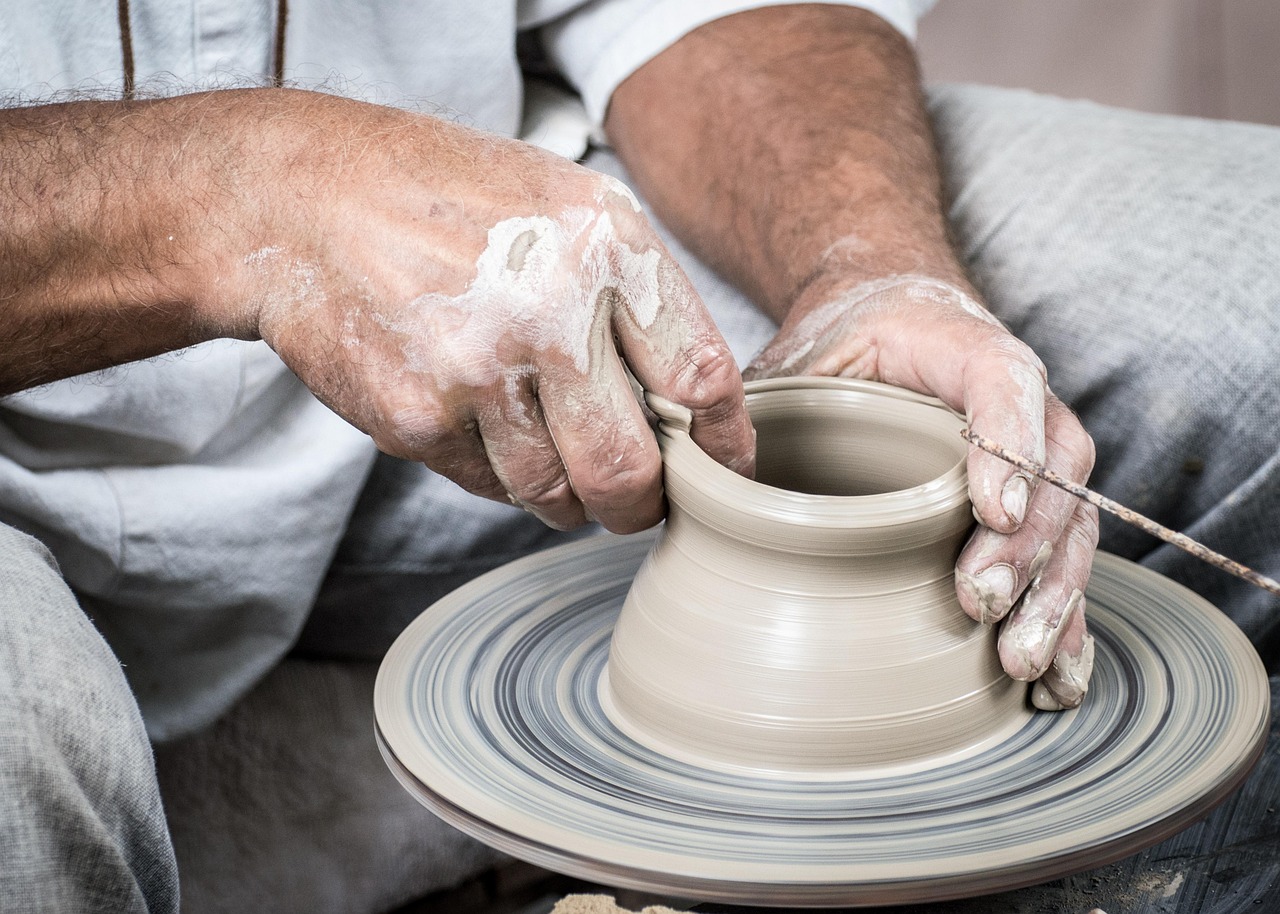
Art Pottery Manufacturing |
|
Indicative cost per annum: $5,000,000 Limit – pricing from $640 $10,000,000 Limit – pricing from $670 $20,000,000 Limit – pricing from $790
|
|
Knitted Product Manufacturing |
|
This class consists of units mainly engaged in manufacturing knitted or crocheted fabrics or knitted clothing, including hosiery, cardigans, jackets, pullovers or similar garments. For example: Indicative cost per annum: $5,000,000 Limit – pricing from $640 $10,000,000 Limit – pricing from $670 $20,000,000 Limit – pricing from $740
|
|
Handmade Toys (Crochet / Knitting / Fabric / Sewn) |
|
Indicative cost per annum: $10,000,000 Limit / $20,000,000 – pricing from $1,100 – $1,300
|
|
Handmade Toys (Other) |
|
Indicative cost per annum: $10,000,000 Limit / $20,000,000 – price upon application/acceptance, but can range from $1,100 – $2,000+
|
|
Candle Manufacturing |
|
Indicative cost per annum: $5,000,000 Limit – pricing from $640 $10,000,000 Limit – pricing from $670 $20,000,000 Limit – pricing from $700
|
|
Soap Manufacturing |
|
Indicative cost per annum: $5,000,000 Limit – pricing from $640 $10,000,000 Limit – pricing from $670 $20,000,000 Limit – pricing from $700 |
|
Paper Stationery Manufacturing |
|
This class consists of units mainly engaged in manufacturing paper stationery products, including paper products used for writing, filing and similar applications.
For example:
Indicative cost per annum: $5,000,000 Limit – pricing from $740 $10,000,000 Limit – pricing from $930 $20,000,000 Limit – pricing from $1,090
|
INSURANCE PRODUCTS AND RISK EXPOSURES FOR HANDMADE MAKERS
The production and sale of handmade products have various risk exposures to consider, and, from a handmade insurance perspective, can be summarised into the following categories:
|
Property Damage |
Operating a business from home or a leased space exposes your business to various risk exposures and damage (e.g. fire, storm, water, lightning, impact, malicious, accidental). If these events occur, you risk losing your contents/equipment and stock which can be a significant value for some businesses. Property Damage insurance can cover these risk exposures. |
|
Theft |
If a criminal enters your property and causes malicious damage (only) to your contents/stock this would be covered by Property Damage. However, if items are stolen then this becomes a Theft exposure and is covered separately under the insurance policy. Given the value of certain products there may be an exposure to burglary and theft for your business that should be considered depending on stock levels. |
|
Public Liability |
The day-to-day operations of your business might expose you to meeting with clients, suppliers, and members of the public. If your business is responsible for causing personal injury to a third party (e.g. slips, trips, falls) or you caused damage to a third party’s property (i.e. knocking over another stall holders pottery and ceramic stock from their trestle table and damaging all of their goods) then Public Liability policy responds to defend these claims or make payment for damages. The exposure from operating most small artisan businesses is considered limited. Although bear in mind each individual business have specific industry risk exposures:
Jewellery makers deal with the application of heating metals with flames there is an exposure to causing fires which could extend beyond your own property to an adjacent business or residence).
Pottery / Ceramics makers deal with clay and is a mineral that presents various risk exposures around the workshop like large bags of clay presenting tripping hazards or glazes presenting a toxic and/or pollution exposure.
Homewares makers might deal with fabrics, fibres, and other materials that when stored incorrectly might present an increased fire hazard or slip/trip/fall risk exposure. |
|
Product Liability |
The products that your business produces and sells create may cause personal injury to a third party and this exposure falls to Products Liability cover. The probability of a claim arising from many artisan products is considered low risk. However, there are other products that will increase the risk exposure, for example:
Soaps / Body Butter / Bath Bomb – certain ingredients might cause a skin irritation to individual customers.
Candles – if you accidentally used the wrong ingredients in your candle and this produces a toxic/hazardous airborne risk to customers when burned. Or, perhaps a scented candle might cause an unexpected irritation to your customer.
Toys – present an obvious chocking risk/hazard to children – even if you use safety (yes!) and even if your “toy” was intended as a keepsake item.
Lampshades / Ironing Board Covers / Heat Packs – the type of fabric you used form your supplier may have not been made from the correct materials and present a fire hazard when your customer keeps them exposed to heat over a prolonged period of time. |
|
Additional insurance products are available for any business but may be cost prohibitive and/or not entirely relevant for most micro/small businesses. These include: |
Money – covering loss of money (e.g. theft) Business Interruption – covers loss of revenue from being unable to trade following a claimable event (e.g. major fire) Glass – covers the damage/breakage of glass or signage Marine Transit – covers the damage of your stock/goods whilst in transit from your suppliers and/or to your clients Product Recall – covers the costs associated with recalling products from your customers following an issue with the product (e.g. dangerous exposure that might cause injury) Equipment Breakdown – covers costs associated with electronic equipment and/or machinery which might be specific and important depending on your business Motor Insurance – covers a motor vehicle for your business Professional Indemnity – covers claims arising from advice/services you provide (for a fee) or are specific to designs you produce and cause a financial loss to your clients Cyber Liability – covers claims arising from a various risk exposures of being online (e.g. hacking, data breaches, etc.) |
RISK MANAGEMENT STRATEGIES FOR HANDMADE INSURANCE & MAKERS
Some examples of risk exposures your business might consider implementing strategies to minimise or reduce the chance of damage and/or injury:
| Fire |
Faulty wiring of appliances – consider testing and tagging services, unplugging equipment when not in use, disposing/repairing equipment which is clearly damaged or faulty.
Load storage areas – having stock/contents stored in a cramped location can be difficult to respond to in the event of a fire (e.g. with a fire extinguisher).
Production of jewellery – may involve the application of heat and creates a fire risk exposure. Ensure suitable fire blankets, fire extinguishers, smoke alarms and other preventative equipment is in use. Also, not to leave open flames or materials exposed to hear left unattended. |
|
Theft |
High values of stock / materials – consider suitability of physical security to the premises (e.g. locks, screens, security camera, security lights, alarms, etc.)
Display stock – items stored on display in a retail or market staff environment could be exposed to being stolen. Ensure display cabinets are locked/secured, to only take out items individually for customer inspection and not to leave stock unattended. |
|
Public Liability |
Slips, trips and falls – ensuring your workspaces and retail spaces are free from spilt liquids, cords, cables, boxes, packing materials, and other day-to-day risk exposures can help minimise the exposure. |
|
Personal Injury (as a Worker) |
Protecting you! – yes, you are the most important part of this business. If you are not safe and able to work you cannot create your wears. It’s important to therefore create a safe working environment for yourself, which might include: Appropriate clothing and personal protection equipment (i.e. closed-toed shoes, aprons, gloves, masks, safety glasses).
Fire safety equipment (i.e. appropriate fire extinguishers for the risk exposure of your business, fire blankets, smoke alarms).
First aid equipment (i.e. a working knowledge of responding to first aid, having stocked first aid box on site and close by, etc.).
Safe working environment (i.e. making sure that children, animals and other hazards around the home are not presenting a risk to damage/injury, having appropriate lighting, etc.).
There are specific insurance products that respond to personal injury to yourself and/or your employees (e.g. Personal Accident Insurance, Life & TPD Insurance, Income Protection, Workers Compensation) however you need to seek specific advice on these products. |
IF YOU NEED A INSURANCE FOR THE SALE OF TOYS PLEASE USE ONE OF THE FOLLOWING LINKS FOR MORE INFORMATION AND TO ACCESS THE APPLICATION FORM:
CROCHET/KNITTED TOYS (ONLY)
https://www.amcinsurance.com.au/insurance-for-crochet-and-knitting-2/
ALL OTHER TOYS (EXCEPT CROCHET/KNITTED)